Category Archives: Food

Cantaloupe, Arugula and Mint Salad

I haven’t felt so good the past week.

In fact, I’ve felt completely crumby for the past week and a half.

4 days ago I noticed a few little red “bug bites” near my left eye.  I figured I got bit when I was out tending to my (struggling) garden, so I didn’t really think much of it.  I scrubbed my face with cleanser and put a bunch of hydrocortisone cream on the bites, but they only got itchier.

The next day, I had a headache and was incredibly tired.  Man, was I tired!  Actually, I’m still tired!

I did a whole lot of nothing, thinking my body just needed some rest.  Then, I noticed the side of my face hurt.  Like, really hurt.  I also  had a giant, swollen lump in front of my ear.  I knew it was my lymph node; so I figured those bug bites were maybe a spider bite and my body was trying to fight off infection–or something.

I didn’t want to think about a spider crawling on my face (that gives me the heebie jeebies!)…so I didn’t.  Instead, I took ibuprofen and went to bed.

When I finally crawled out of bed the next day, my eye felt funny.  It was really swollen and itchy; and my lymph node was huge (as big as an egg!).  I decided I better see the doc.

She walked in the room, looked at my face, and said “I think it’s shingles.”

What?!  Shingles?!  But…I’m only 27!

I’m young.  I’m healthy.  I shouldn’t have shingles!

Unfortunately, I do.  Apparently they are becoming more common among younger people; and they’re often related to stress.

Stress about what?  I have no idea.  I don’t feel stressed. There is absolutely no reason why I should be stressed; but I guess I am.  Hmphf.

The worst part about having shingles is that I can’t wear my contacts and have to wear my glasses (does that make me vain?).  …Also, I can’t be around my niece, my nephew, or my grandparents.  I’ve been told I can’t go to work either (sorry co-workers!).

Having shingles is unattractive, inconvenient, unpleasant, and BORING! I’m going stir-crazy being stuck in the house!  You’d think I’d have a good time…you know, maybe get caught up on blogging and do some experimental cooking.  But the truth is, I just now opened the computer (4 days into this ordeal)…and haven’t had the energy (or motivation) to cook.

I couldn’t stomach the thought that I’d have to eat takeout for another day.  I’m sick of takeout.  So this afternoon I rummaged through the refrigerator and found a bunch of random ingredients.  I had arugula,  lots of mint and a bunch of chopped shallots hanging out in my produce drawer.  I also had some cut up cantaloupe.

Salad, it was!

Cantaloupe, Arugula and Mint Salad with Chevre

I had no idea how this salad would taste, or if my husband would even eat it, but it turned out to be a success!  The arugula added a little bitterness to what would otherwise be a very sweet salad.  It balanced really nicely.

I think it would make an incredibly beautiful fruit salad as well.  I can imagine less arugula and more cantaloupe, honeydew and watermelon.  Maybe add a little more mint and a smidgen of honey drizzled over everything.  Yum!


As for a recipe, I simply tossed my greens (I used baby arugula), chopped mint, and chunks of cantaloupe together.  I then drizzled with a little homemade dressing, and garnished with some chevre.

The dressing was quite simple, and used things I had on hand.  If you decide to try this recipe, feel free to substitute whatever you think would taste good.  You could even make a simple balsamic vinaigrette with some olive oil, salt, pepper and balsamic vinegar.

In fact, a flavored olive oil or balsamic vinegar would really enhance the dressing.  I didn’t have any flavored oil or vinegar that would work, so I used a mixture of olive oil and vegetable oil.  I also used apple cider vinegar–for a little flavor.

Cantaloupe, Arugula and Mint Salad Dressing

This recipe makes quite a bit of dressing.  I only use about 2 tbsp to dress my salad, so I’d say this makes enough for 6-10  salads (depending how much dressing you use).

  • 1/4 c. apple cider vinegar
  • 1/4 c. olive oil
  • 1/4 c. vegetable oil (use all olive oil, if you prefer)
  • Honey, to taste (I used a few tbsp.)
  • 3 tbsp. mustard (I used Blueberry mustard, but any Dijon or dark mustard would be great–steer clear of the yellow stuff in the Heinz bottle).
  • 2 medium-large shallots, diced
  • salt-to taste
  • pepper- to taste

I toss all the ingredients in a mason jar (the medium sized one) and shake it until everything is mixed really well.  Drizzle it over the salads, and store the remainder in the jar.  It’ll stay good for a week (even longer…) if kept in the fridge.
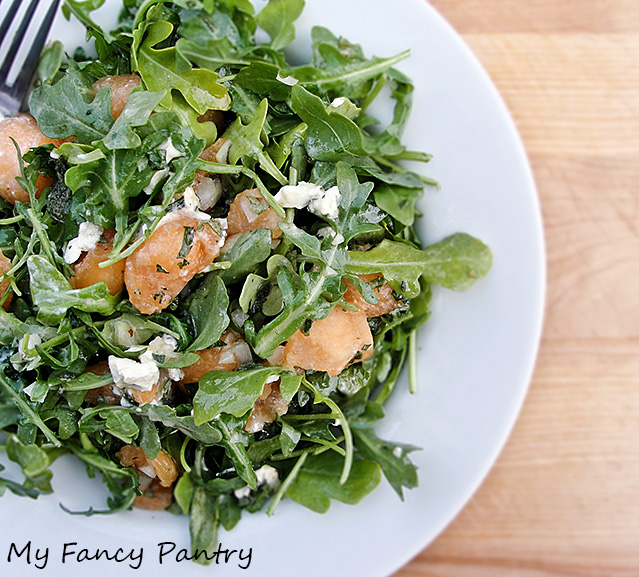
Fresh salad of Cantaloupe, Arugula and Mint

Hopefully I’ll get back to blogging more regularly soon!  In the mean time, I hope you enjoy this salad!
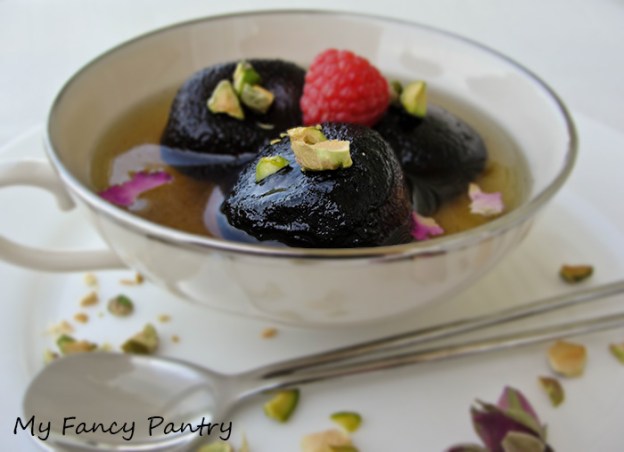


Gulab Jamuns and Kala Jamuns: Indian Sweet Success!

Whoa! I haven’t blogged for over a week! I had quite a few posts started, but I just couldn’t find the motivation (or the time!) to complete them.

But really, if I’m being honest, it’s probably mostly because I just wanted a break from the computer…and the kitchen.

Indian Sweet Kala Jumun

If you’re a regular reader of my blog, then you may remember my first attempt to make gulab jamuns.  If you’re new to my blog, Namaste and thank you for visiting! You can read all about this tasty little sweet HERE.

Although gulab jamuns are quite tasty, kala jamuns are definitely far superior in taste (in my not-so humble opinion).  Kala jumuns are simply blackened gulab jamuns.  A scant teaspoon (more or less, depending on your recipe) of sugar is added to the dough.

When the dough balls are fried, the sugar begins to caramelize, creating a dark colored shell.

Frying the dough balls

After a few minutes…

Kala Jamuns: Black Gulab Jamuns

I’m not really that good at frying things–remember when I melted the plastic spoon (what was I thinking?!) trying to deep fry samosas?–so some lessons I’ve learned when deep/shallow frying are:

  1.  Do not use plastic utensils.  This should be pretty self explanatory, but apparently it isn’t.  Either that, or I have no common sense.
  2. Don’t keep the heat turned to HIGH, you’ll end up burning your food–and yourself.
  3. Don’t put too many things in the oil at once.  The temperature will lower significantly and the food might be oily/mushy.
  4. Don’t use the wok.  I’m not sure why this didn’t work for me, because it seems like it’d be a great pan to fry stuff in.  But my oil got way too hot, way too fast…and wouldn’t cool down.  My food was burned on the outside and raw on the inside.  Maybe there’s some frying-with-a-wok secret that I’m not aware of?  Care to enlighten me?
  5. While frying stuff–especially things that cook relatively quickly–you’ve got to pay attention.  This isn’t the time to organize your spice cabinet, or unload the dishwasher.  Trust me.

Aside from frying the dough-balls, they also have to be rolled properly.  If your dough balls have cracks all over them, they will probably break apart in the oil.

They might also become hard in the centers…and no one enjoys hard gulab jamuns!  There are a few simple ways to avoid the cracking of your gulab jamun dough.

First, you’ll want to be sure the dough isn’t too dry.  You might need to add a little additional liquid–only a tiny bit at a time.  The ideal gulab jamun dough should be pretty soft, and not crumbly.  It also shouldn’t be sticky or overly wet.  You’re aiming to find a happy balance between wet and dry ingredients.

If your dough seems fine, then maybe you need to re-think your rolling technique.  What i do is pinch a piece of dough and roll a ball between my two hands.  The ball will usually have a few cracks.  Then, I simply flatten it in my hands and re-roll the ball.

The photo on the top is what my dough looked like after I just rolled it into a ball with my hands.  This is what that same piece of dough looked like after I flattened it and re-rolled it:

You can see it’s a pretty huge difference!

Now, since we’ve talked a little about technique, let’s get to the recipe!  This recipe is quite good–perfect, even.  It took quite a few trials, and a lot of failures;

FAIL! The dough was too wet and I used too much baking soda. The dough looked perfect, but as soon as it hit the oil it swelled huge…and then collapsed.  The oil also was not hot enough.

but I’ve finally figured out how to make this extremely popular Indian sweet at home!

After my first trial, I got quite a bit of feedback from blog readers (thank you!) and my in-laws.  In fact, Maa (my mother-in-law) was so determined to help me, she attempted to make a batch so she could give me some pointers (and a great recipe!).

Maa’s looked so pretty, so perfect;

Maa’s beautiful gulab jamuns

but sadly we don’t get fresh khoya (thickened milk “dough”) here in America.  And I definitely didn’t have time to sit over a stove and stir all day.  So I did a little searching and found a bunch of things I could use in replacement of the fresh khoya.

Luckily, I was able to find something called “mawa milk powder” at my local Indian market.  Mawa powder is probably the next best thing to actual fresh khoya.  It’s similar to milk powder–but it’s thicker.  It is basically a dried version of khoya (you can learn about the differences between regular milk powder and mawa powder HERE, if you’re interested).

So now that I had the mawa powder, I had to figure out how to turn it into khoya.  I did a lot of research online, and couldn’t really find a definite answer.  I found one recipe that said to use 2 cups mawa powder and 1 cup of liquid.  So I tried it.  I kept adding milk/mawa until I got the amount of khoya Maa told me I’d need.

The dough looked promising, but it just didn’t work.  The gulab jamuns fell apart in the oil and became quite flat.  After a lot of experimenting, I finally stumbled across the magic and mysterious ratio of mawa powder to liquid!

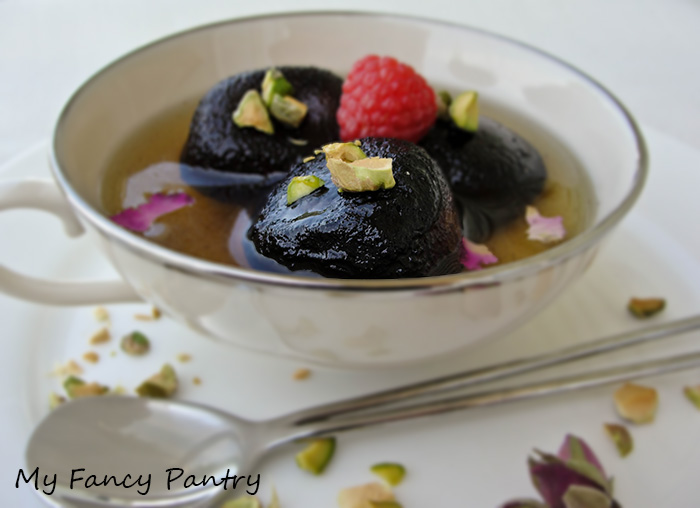
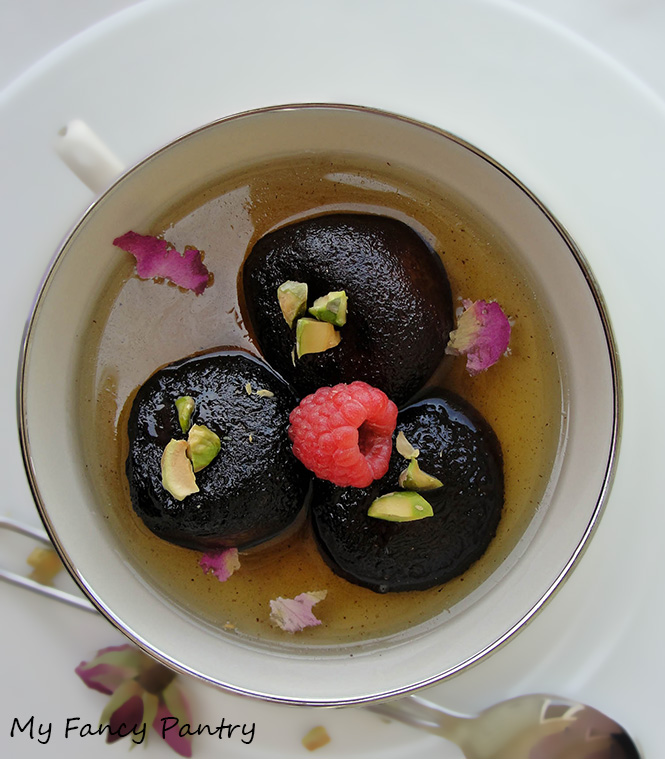
Kala Jamuns with a candied raspberry, pistachios and rose petals

The sugar syrup is quite easy.  Just toss 3 cups of sugar along with about 2 1/2 cups of water in a heavy bottomed pan over medium-high heat.  I added a few spices–cardamom and rosewater (I never really measure)–and let it cook for a good 20 minutes, until it thickened and became quite sticky.

When it’s the right consistency, remove from heat and cover with a lid to keep warm.

You can add cardamom, clove, cinnamon, maple syrup, lavender, rose water…the options are endless!  Just be sure to taste and add a little at a time so that the spices don’t become overwhelming  (especially important with cinnamon and rosewater!).

This makes quite a lot of syrup, more than you’ll ever eat with the gulab jamuns.  When the sweets are gone, I strain the syrup into a bottle and toss it in the fridge, labeled as “Gulab Jamun Syrup”.  It’s perfect on pancakes, in coffee, or to use in baking!

Gulab Jamun (Kala Jamun) Recipe:

Makes approximately 15 gulab jamuns–depending what size you make the dough balls

Ingredients:

  • 1 c. Mawa powder (available at Indian grocery stores, or online)
  • 1 tbsp. all purpose flour
  • 2 small pinches baking soda (approximately 1/8 tsp.)
  • 4 to 6 tbsp. half & half (start with 4, add more if needed)
  • spices- as desired (cardamom, clove, cinnamon…ect. Add whatever you like, just be sure not to add too much)
  • 1 tsp. sugar (only if making kala jamuns, leave out if making gulab jamuns).

Directions:

  • Heat a mixture of oil and ghee (I add about a tbsp. of ghee to whatever the amount of oil) in a heavy bottomed pan (I used a non-stick fry-pan).  You don’t need a ton of oil, maybe anywhere from 1/2 c. to 1 c. (this can be re-used a couple times).   Heat to approximately 300 degrees F.
  • While the oil is coming to temperature, toss all ingredients into a bowl and mix well.  Knead the mixture for a few minutes until it becomes smooth and soft.  Add additional liquid, as needed.
  • Roll the dough into crack-free balls, about the size of a large marble.  They will expand while cooking.
  • Once the oil comes to temperature, fry the dough balls in batches–about 4 at a time–until the outsides become brown or black (for kala jamuns) and the interior is cooked.  This should take about 4 minutes.  Be sure to flip the balls around so that all parts have equal color.
  • Remove from the oil and place on a paper towel for 30 seconds to a minute.  Toss into the syrup.
  • Let the gulab jamuns sit in the syrup for at least 20 minutes to an hour before serving–for best flavor!

Kala jamuns, unlike gulab jamuns, are not traditionally served in a bowl of sugar syrup.  Instead, they are usually left to soak the syrup, and then served “dry.”  But I say, do what you want! 🙂  Rules are made to be broken!

This recipe is absolutely perfect, and I think it’s the closest I could possibly get to recreating what I tasted in India!  Especially for the kala jamuns.  The outsides were sweet, black and oh so tasty!  The insides were moist and soft–not at all dry!

Piyush and I enjoyed these outside with a steaming glass of chai.  Indian sweets pair excellently with chai!

We also shared most of the sweets with friends and family (after all, I made about 5 batches…I was determined to make them perfect!), but they can also be frozen along with some syrup.

If you freeze them, pop them in the microwave for a minute–or so–to warm them up!

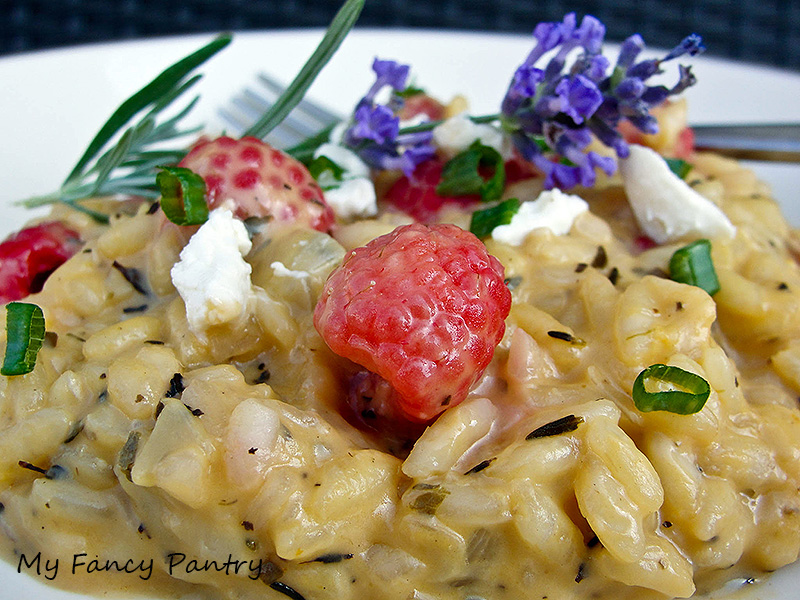
Raspberry Risotto with Herbes de Provence and Chevre

When life gives you lemons, you make lemonade.

When Driscoll’s Berries contacts you and asks if you’d like to try their raspberries, you tell them yes; and then make a risotto!

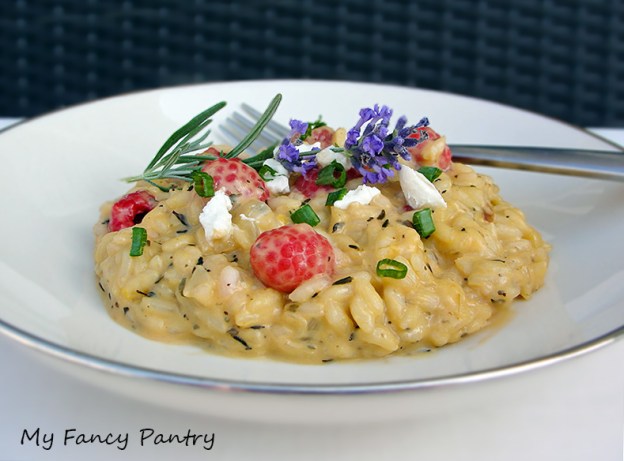
Raspberry Risotto with Herbes de Provence and Chevre

The truth is, I’ve been buying Driscoll’s berries for years.  Even when the berries aren’t in season, they’re usually pretty good.  But during the summer, when the raspberries are at their peak, they are out-of-this-world-amazing!

I was sent some coupons for $2.00 off a package of berries–which is a good deal, but I was sort of sad that I still had to pay a little over $2 out of pocket per package–especially when they’re in season.  Berries are expensive!

I brought the berries home and devoured a small handful!  They were plump and sweet.  Just how I like them! 🙂

I knew I had a really busy week ahead, and wouldn’t have a chance to get to the berries before they lost their freshness, so I decided to freeze them.  Freezing the fruit at it’s peak ripeness is a great way to enjoy the berries all winter long.

In my opinion, frozen berries picked in-season always trump fresh berries out-of-season.  Always.

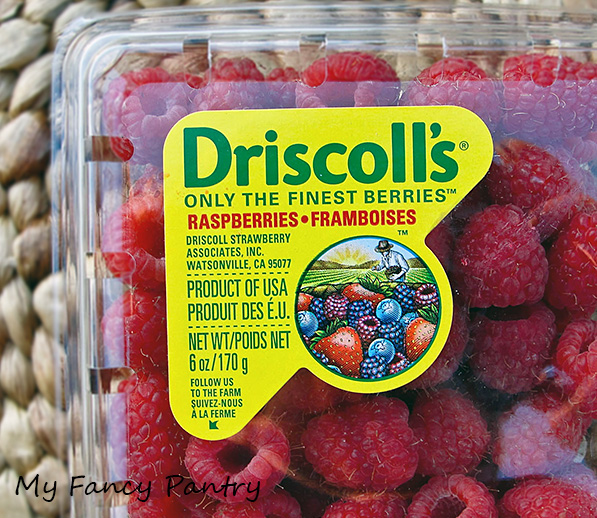
Driscoll’s sweet red raspberries

I had all sorts of sweet ideas about how to use the raspberries.  Pies, tarts, jams, jellies, quick breads…and they would all be equally delicious; but I wanted something savory.  And I didn’t want a sauce.

I found this recipe on Driscoll’s website that looked pretty good, and I’m probably going to give it a try eventually (probably during the holidays…yum!):

But it wasn’t what I wanted tonight.

I did a lot of searching, and had a hard time finding inspiration.  There’s not really many savory raspberry recipes–aside from salads or sauces–that I’m aware of, and that’s quite unfortunate.

So I ventured a little outside of the box and decided to try the raspberries in a risotto.  I was pretty sure it’d taste good, but I was also pretty sure Piyush would hate it.

I was right; the risotto tasted amazing.  But I was also wrong.  Luckily, Piyush didn’t hate my risotto.  Quite the opposite, actually.

In fact, Piyush loved it; and that means something.  He’s such a food critic.

Raspberry Risotto with Herbes de Provence and Chevre

Serves 4

If you are bothered by the seeds in the raspberries or would like a pink colored risotto, you can puree the berries and run them through a fine sieve before adding to the risotto.

Ingredients:
  • 1 c. uncooked arborio rice
  • 5-6 c. veggie stock
  • 2 tbsp. olive oil
  • 2 large shallots – chopped
  • 3 large garlic cloves- smashed and chopped
  • 1 tbsp. + 1 tsp. herbes de provence
  • 3 tbsp. dry white wine (I used a dry Marsala)
  • zest of 1 small lemon
  • juice of 1 small lemon
  • 2 oz. chevre (goat cheese)
  • 1 c. frozen Driscoll’s raspberries
  • salt- to taste
  • cracked black pepper- to taste
Directions:
  • Bring Stock to a simmer in a small saucepan (do not boil). Keep warm over low heat.
  • Pour 2 tbsp. olive oil into a heavy bottomed pan (I used my dutch oven) and heat over medium-high flame.  Once the oil is hot, add the shallot and garlic–stirring constantly.  You don’t want the shallot to take on a brown color, but you want it to be cooked through and semi-translucent –approximately 3 to 4 minutes.
  • Once the shallot and garlic are cooked, add the Herbes de Provence.  Stir to combine.
  • Add the uncooked rice to the pot and cook (stirring constantly) for about a minute.  Add 3 tbsp. wine to deglaze. Keep stirring the rice until all the wine seems to be absorbed and the pan is looking dry.
  • Add one ladle of stock (approximately 1/2 c.) and stir until nearly all of it is absorbed by the rice.  Keep stirring and adding stock 1/2 c. at a time as the rice absorbs it.  I ended up using about 5 cups of stock, but it will really depend on how long your rice takes to cook (you want the rice to be al dente –it should have a little bite to it) and how creamy you like your risotto. This process will take anywhere from 20 to 30 minutes.
  • Add the goat cheese, lemon zest, lemon juice, salt, and pepper. Keep cooking and stirring until the cheese is completely melted.  The risotto should have a nice thick, creamy consistency at this point. Fold in the frozen raspberries. Cook 1 or 2 minutes longer, until the raspberries are no longer frozen. Remove from heat.
  • Serve as soon as possible for best flavor.  Garnish with extra chevre.

Raspberry Risotto with Herbes de Provence and Goat Cheese

Herbes de Provence is a fantastic French dried-herb blend.  It usually includes herbs such as: lavender, rosemary, tarragon, basil and thyme.  Aside from this risotto, it’s also wonderful to use when roasting a chicken.  It smells so fragrant and floral!

Raspberry Risotto garnished with a sprig of lavender from my garden!

This was a perfect meal on a hot, summer day.  Nothing beats a bowl of risotto and a nice, chilled glass of wine!  🙂

Well….almost nothing!  You see, I also made a batch of Kala Jamuns.  Kala Jumuns–blackened gulab jamuns– are amazing Indian sweets, and I finally recreated them perfectly (thanks Maa, Baba, and everyone else that helped with the sweet-making advice)!

Homemade Kala Jamun

You can read about kala jamuns and gulab jamuns HERE, and see my first attempt to master this sweet.  …and if you’re interested, check back.  I’ll have the basic recipe posted soon!

Chicken Chapli Kabab: Pakistani Style

We, Americans, eat a lot of burgers.  Hamburgers, turkey burgers, veggie burgers…they’re all an important part of our culture.   We love pretty much anything if it’s formed into a patty, placed on a bun, and slathered with toppings.  …and who can blame us?  Burgers are good!

We also love kababs.  Meat, veggies, fruit–it doesn’t matter.  If it’s been skewered or is served on a stick, we’ll eat it, and we’ll savor every last bite.

Now, things are really going to get interesting.  I’d like to introduce you all to the spicy, tender chapli kabab!

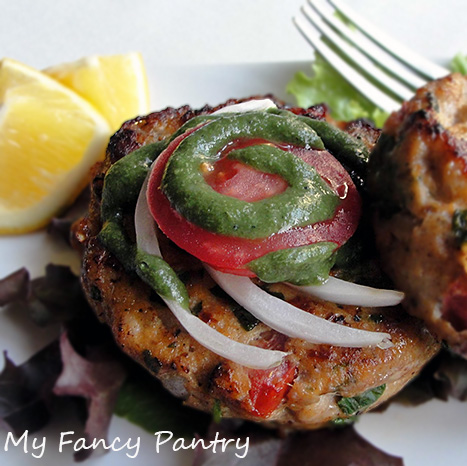
Chicken Chapli Kabab

It’s a kabab, but it’s not served on a stick.  It’s also a burger, yet it’s not on a bun.

The first time I tried traditional kababs, I’ve got to admit, I was confused.  They weren’t hunks of meat or vegetables threaded onto a skewer.  Heck, they weren’t even grilled!  Instead they were made of ground meat, studded with spices and little bits of vegetables.  They were tender, juicy, and quite unlike anything I’d had before.  I was hooked.

This version of kabab, the chapli kabab, is very popular in both Pakistan and Afghanistan.  They’re usually made with minced beef or lamb, but can also be made with chicken. The kababs get their name because of the way they’re shaped.  Piyush tried to convince me that they were called chapli kababs because they were flat like chappals (sandals), which is sort of true.

A pair of Piyush’s chappals

In actuality, they’re not named after the chappals, although it was a good guess.  They’re actually called chapli kababs simply because they’re flat.  The word chapli is derived from a Pashto (spoken in Pakistan and Afghanistan) word, chaprikh, also meaning flat.

Piyush and I first tasted the incredible chapli kababs at a Pakistani restaurant here, in Rochester.  The restaurant is called Kababs (if anyone is interested), and serves fabulous home-style food.  The food is very, very similar to authentic Indian dishes–especially dishes served in West Bengal (although the spices are a little milder, and the curries are definitely not as hot).  It’s cheap, and it’s good.

My chapli kababs were an even match, taste-wise, to what we ate at the restaurant.  The only difference is that I made mine a little thicker than they should be.

Pakistani-style Chapli Kabab topped with raw onion, tomato slice and mint/corriander chutney

I plan on making these again and again.  I can’t wait to grill these and serve them as alternatives to hamburgers at our next bbq.  Not only do they pack some incredible flavor, but they’re also pretty healthy.  Each kabab is around 140 calories, and it’s full of veggies.

I made the kababs using a pound of skinless, boneless chicken thighs.  I tossed the meat in my food processor and processed it until it was a smooth, paste-like consistency.  I then chopped a whole bunch of veggies: tomatoes, onion, green onion, serrano chilies, garlic, ginger, corriander…and tossed them all in with the meat.

I mixed everything really well, making sure to squeeze the juices from the tomatoes as I mixed–this helped keep the meat juicy and flavorful (I think…).  I added freshly ground corriander seeds (not ground to a powder), ground cumin seeds, dried pomegranate seeds, a little besan flour (chickpea) and even some crushed red pepper.  I seasoned the meat with salt and black pepper, and then formed into patties.

I used a pastry cutter to make the patties, mostly because I wanted them to be the same shape and size.  Also because I didn’t want to get my hands dirty after I had just washed them.  …What kind of cook am I?!

After the patties were formed, I tossed them in the freezer for about 15 minutes.  You don’t have to do this, I just find it helps hold the patties together a little better.  In fact, it seemed to work so well, I didn’t have a single patty fall apart on me.  Surprising, considering how much other stuff I had tossed in with the meat.

When I was ready to cook the patties, I put a little oil in a non-stick pan–just enough to coat the bottom.

If you’re trying to avoid oil, you could just use a non-stick cooking spray.  It should do a similar job, although you might not get that beautiful golden sear on the patties.

Chapli Kababs, ready to serve!

These patties were so juicy!  Chicken tends to get really dry, really fast; but I really think all the water from the veggies helped keep everything tender and moist.  This photo isn’t the best shot, but I think you can really see how juicy the kabab is.

Chicken Chapli Kababs (Pakistani Style)

Makes 9 medium-sized patties

Ingredients:
  • 1 lb. skinless and boneless chicken thighs (alternatively, you can use a combo of thigh/breast meat)- minced or ground in food processor
  • 1/2 medium white onion- diced
  • 2 roma tomatoes- diced
  • 2 large green onions- chopped
  • 3 serrano chilies (may use jalapenos)- seeded and chopped
  • handful corriander leaves (cilantro)- chopped
  • 1 tbsp. garlic paste
  • 1 tbsp. ginger paste
  • 1 tsp. corriander seeds – ground, but not into a powder*
  • 1 tsp. cumin seeds- ground, but not into a powder*
  • 1 dried red chile- ground to a powder (optional.  This will make the patties very spicy)*
  • 1 tsp. dried pomegranate seeds- ground*
  • 2 tsp. besan flour (chickpea flour–alternatively all-purpose flour would work too)- more if needed to hold the patties together
  • salt- to taste
  • pepper-to taste
  • oil- for frying (I think I used about 4 tbsp. total)
* Note: Any ingredient with a * after it could be substituted by using a pre-made chapli masala mix.  This mix may be hard to find, but many Pakistani grocers (and even some Indian grocers) will carry it.
Directions:
  • If your meat is not minced, grind it in a food processor until it is broken down and is paste-like in consistency.
  • Add all chopped veggies and spices to the meat, and mix together using your hands.  Squeeze the tomatoes as you mix everything together, releasing their juices.  Mix until everything is well combined.
  • Form the meat mixture into patties.  Either roll the meat into balls and flatten with your hands or use a burger press/mold.
  • Freeze patties on parchment paper for about 15 minutes.  They don’t need to be frozen through, just cold enough that the meat sticks together better.
  • Heat oil in a large non-stick pan over medium-high heat.  Once the oil gets hot, add the patties.  Cook in batches so they are not over-crowded in the pan.
  • Cook each side for about 2 or 3 minutes, until you notice a nice golden color on the outside.  Watch the sides of the patties, once they are no longer pink or raw, your kabab should be nearly done cooking.  Total time, about 5 minutes a patty.
  • Remove cooked patties from pan and lay on a plate lined with paper towels.  Serve immediately, garnished with corriander leaves, tomatoes, raw onion, and lemon wedges.  Serve the kababs along with chutney and rice or naan.  Enjoy!

And now, because I shared Piyush’s pretty chappals, I wanted to share some of my own Indian-style footwear! …I mean, what girl doesn’t love shoes?!

These were bought in Kolkata.  I love them, but have not worn them yet.  I’m putting it off because I know it’ll be painful (at first…).

These are my favorite, and were purchased in Amritsar, India–near Pakistan.

Yes, I really am that white. It’s sad, really. I wish I could tan…  I also have hideous feet.  They’re ugly, but they’re mine. 🙂

These shoes aren’t called chappals.  I can’t remember what they are called, actually.  They took about a month to break in (after struggling though some bad shoe bite!  They even made my feet swell HUGE), but are now my most comfortable pair of shoes.

…and since I was mentioning Pakistan, I thought I’d share a photo from the India Pakistan boarder.  This is as close as I got…You see that big white structure in the back of the photo?  That’s the entry to Pakistan.

It was incredible to see all the patriotism–from both India and Pakistan.  There were tons and tons of people, lots of dancing and music, and even a peace ceremony between both countries.  It’s something I feel blessed to have attended, and I hope to attend again (although we’ll get there earlier next time.  It fills up fast, and can be really hard to see anything).

If you’d like to see the ceremony, here is a video that explains it pretty good:

http://www.youtube.com/watch?v=YeSX6AZ5xEI

Aloo Gobi (Indian Spiced Potatoes and Cauliflower)

Since knowing Piyush and his family, I have eaten–and grown to love–foods I swore I didn’t like.  Foods I absolutely, positively hated.   Foods like: cucumbers, chilies,tomatoes (unless they were served in a bottle clearly marked HEINZ–I love ketchup) and the oh-so-dreaded cauliflower!

On the (very) rare occasions that my mom prepared this unpopular–at least in my household–white vegetable, it was either served raw with ranch dressing (I hate ranch!) or boiled until it turned to mush.  It smelled funny; and I didn’t like it.

I had completely banished cauliflower from my life.

That is, until I tasted aloo gobi.

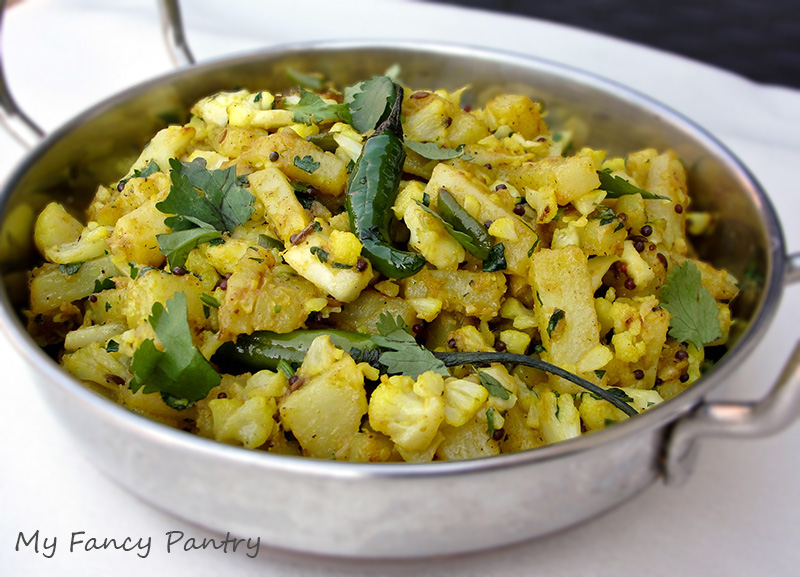
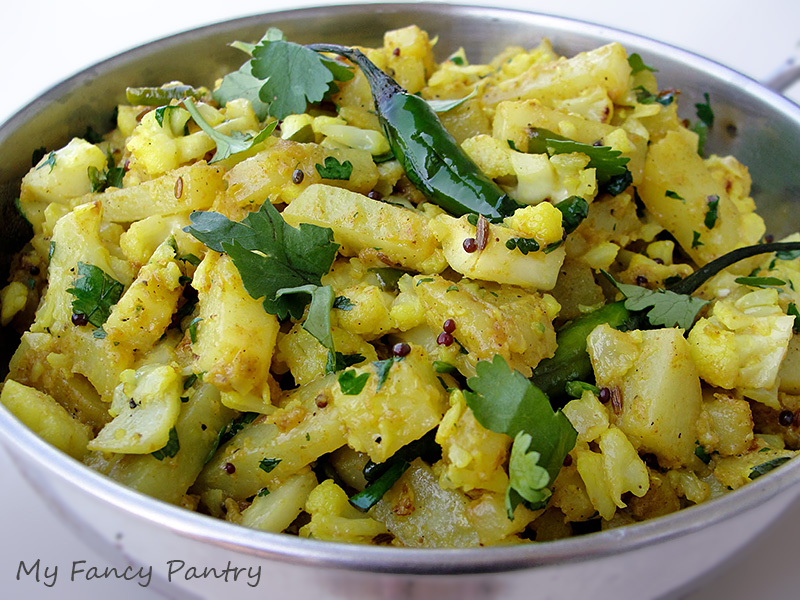
Aloo Gobi: Indian Spiced Potatoes and Cauliflower

I don’t quite remember the first time I tried this dish, it was so long ago; but I can tell you that it changed my life.

It taught me that vegetables could–and do–have flavor.   This simple–yet complex– vegetarian dish also helped me to realize that vegetables don’t have to be mindlessly tossed on my plate alongside a giant hunk of chicken.

Instead, they can shine on their own; as a flavorful and filling meal.

Aloo Gobi is an easy, and very inexpensive, dish to make on a busy evening.  In it’s simplest form, it consists of potatoes, cauliflower and Indian spices.  But Indians are very innovative, so you’ll find that every part of the country–and practically every household–has their own version; sometimes adding tomatoes, peas, curry leaves, or even a few squeezes of lime juice.

This is my basic version, but feel free to make the recipe your own.  Add what you have on hand.  Do you have some forgotten carrots in the back of your fridge?  Are they sprouting little roots?  Peel them, and toss them in!  Personally, I think crushed peanuts would be a pleasant addition.  Anything goes!…well, almost.

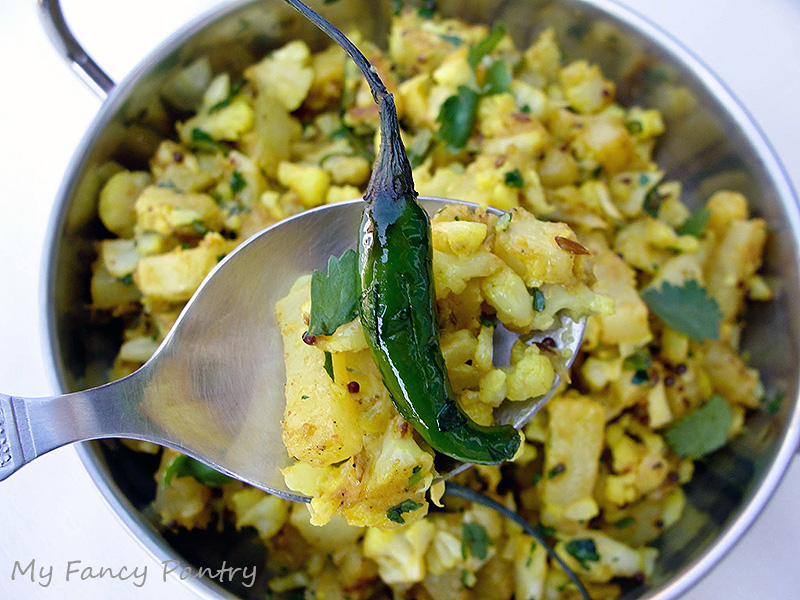
Toss in some slit chilies!

Aloo Gobi ( Spiced Potato and Cauliflower)

Serves 4

This recipe will yield an incredibly delicious, but rather dry dish.  If you would like to make this dish more like a curry, add a little water and some chopped tomato (about 1 roma tomato would be just fine).  Aloo Gobi is delicious served with naan or rotis, and makes an excellent side dish!

Ingredients:
  • 1 small head of cauliflower (or 1/2 regular-sized)- cut into small pieces
  • 2 medium sized potatoes- peeled and diced
  • 2 tbsp. oil
  • 2 jalapenos- seeded and diced (leave the seeds in for extra heat)
  • thai or serano chilies- leave whole, but slice 2 or 3 slits in the chili (optional)
  • 1 tbsp. ginger paste
  • 1 tbsp. garlic paste
  • 1/2 tsp. black mustard seeds
  • 1/2 tsp. cumin seeds
  • 1/2 tsp. ground turmeric
  • 1 1/2 tsp. cumin powder
  • 1/2 tsp. garam masala
  • salt- to taste
  • black pepper- to taste
  • 1/4 corriander (cilantro)- chopped, extra to garnish
Directions:
  • Prepare all vegetables and keep them near.  Heat 2 tbsp. oil in a large pan over medium-high heat.  Add the mustard seeds and cumin seeds.
  • Once the seeds begin to pop and crackle, add the cauliflower, potatoes, chilies, ginger, garlic, turmeric, cumin and garam masala.  Stir everything to combine.
  • Continue to stir/fry for about 10-15 minutes, until the cauliflower and potatoes are cooked to your liking.
  • Once the vegetables are properly cooked, season with salt and pepper and add the chopped corriander.
  • Serve, garnished with additional chopped corriander.

Indian spiced potatoes and cauliflower: Aloo Gobi

Tonight, because Piyush wanted something more than just the aloo gobi, I served it with some vegetarian momos.  Momos are incredible, and if you haven’t tried them, you must!  You can learn more about them, and find my recipe HERE.

Aloo Gobi with Vegetarian Momos

And now, because I’ve been talking about vegetables, I thought I’d share a few shots of stuff from my garden.  This heat-wave we’re currently experiencing is causing my plants to struggle a little, but overall they’re doing pretty good.

…and I have to admit, no vegetable tastes better than one you’ve grown yourself.  I feel so excited when I pull something out of the dirt!  And so proud!  🙂

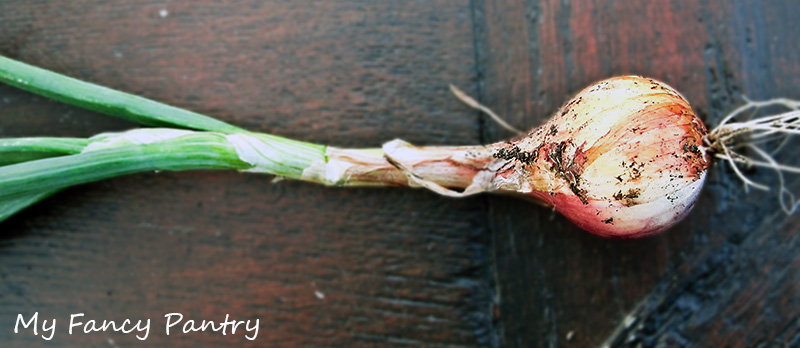
This shallot became an awesome raspberry vinaigrette! I’ll share the recipe soon!

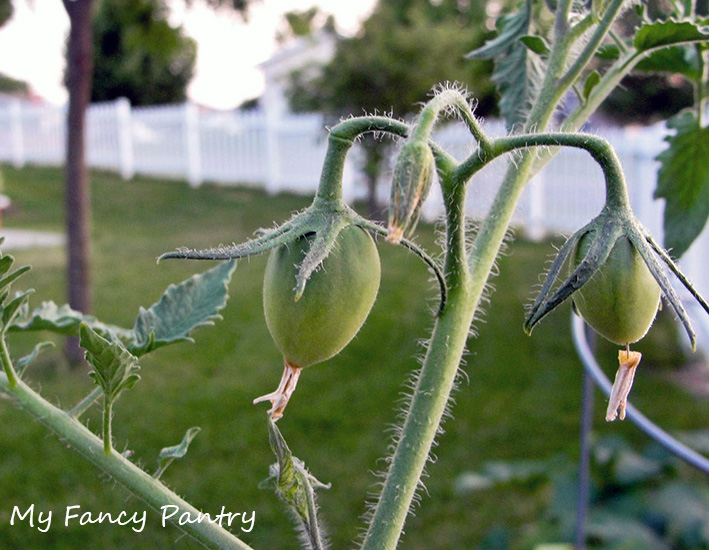
Heirloom Amish Paste Tomatoes. This plant was almost dead, but it’s been coaxed back to life!

Basil! I have a giant basil plant as the centerpiece on my outdoor table. It’s thriving, and smells so good!

And because it really is amazing….

It deserves a close-up! 🙂

Home-Style Chicken Masala (Indian-Spiced Chicken Stew)

It’s no secret that I love Indian food.  Love may even be an understatement.  Truthfully, I am obsessed with the cuisine!

Sure, I enjoy the typical restaurant fare: chicken tikka masala, saag paneer, and even heaps of naan slathered with ghee (clarified butter).  Yes,  I admitted it.  I love ghee.  But, that’s not the point…(**quickly changes topic**)

What I’m trying to say is that the restaurant stuff is good, but it doesn’t even hold a candle to the rustic and inventive food served in the Indian home.  There is absolutely no comparison.

The curries my mother-in-law (Maa) and my father-in-law (Baba) create aren’t just food.  No way.  If you could just have one taste, you’d understand; these curries are love.

Home-Style Chicken Masala

Continue reading

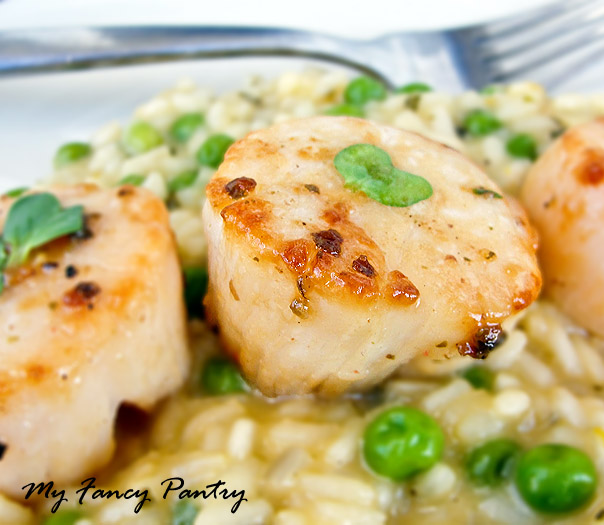
Pan Seared Scallops With Sweet Pea, Tarragon and Lemon Risotto

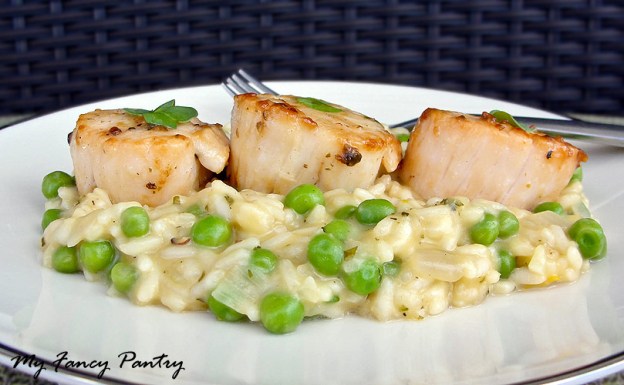
Pan Seared Scallops With Sweet Pea, Tarragon and Lemon Risotto

Sometimes figuring out what to make for dinner can be quite the challenge.

You see, I have this terrible problem of never knowing exactly what I want.  Then, when I think I have it all figured out…BAM!…it changes, and doesn’t sound interesting anymore.  (Haha!  Kind of like my career-path, now that I think about it.  I never could decide exactly what it was that I wanted to be…).

So today, like most days, I wandered off to the supermarket to buy ingredients for an Indian-inspired dish using scallops.  Small problem.  I didn’t really feel like eating Indian.

I wanted something flavorful, but not spicy.  Something that was both hearty and filling.  I wanted to eat out!

I knew Piyush would not be happy if I told him I wanted to go out tonight, especially because our refrigerator was well stocked and I had just spent a small fortune on fresh scallops.  So I opened up the pantry doors and hoped for a little inspiration.

And then I saw it.  A big jar of arborio rice, sitting right in front of me.  I decided to try my hand at making risotto.

I’ve never attempted to make risotto before, and have actually only tried it once.  I remembered it being a little crunchy and dry and I didn’t understand what all the fuss was about, really.

But now that the idea was in my head, I had to have risotto.  And I had to have it now.  That’s just how I am, I guess.

After searching online and getting a little inspiration from Gordon Ramsay, random youtube people and the lovely Angela @ Madame Croquette (truthfully it was probably reading her post on saffron risotto with tiger prawns that sparked tonight’s dinner), I got to work.

I found a recipe from Cooking Light that sounded like it would taste spectacular (It did!)–and I had all the ingredients on hand.  From start to finish, making the risotto took about a half hour–with at least 25 of those minutes spent stirring the rice.  It was tedious, but zen-like at the same time.  I liked it.

Unfortunately I didn’t take any photos of the risotto making process.  It really is a process, and I was too involved with stirring (and day-dreaming) to even think about clicking photos.  Sorry!

I’ll pass on a little risotto-makin’ knowledge though…

First, make sure you have all your stuff ready.  Usually I run around like a crazy person, digging through cupboards and raiding the refrigerator; but this time I had everything pre-chopped and pre-measured.  I think this was the biggest contributor to my risotto success!

Second, make sure to taste your rice as you cook.  Each time I tossed in a ladle of stock, I tried a grain or two of the rice.  You don’t want it to be crunchy, but it shouldn’t be mushy either.  Aim for your rice to be cooked al dente.  A little “bite” is a good thing!

Once the risotto was finished, I set it aside and got started on the scallops.  I learned to cook scallops last year, and I’ve got to tell you…it’s simple!  They look intimidating…but looks are deceiving!  I really have no idea how all those cooks on the “reality” cooking shows can screw them up.  Honestly.  It’s crazy.

One thing I love about scallops is that they cook really, really fast–which make them an ideal match for risotto (you don’t want the risotto to go cold).  On the other hand, one thing I hate about scallops is that they stink up your house.  Completely.

Brown Butter Pan Seared Scallops–garnished with a little radish sprout

To cook the scallops I used a non-stick pan.  I usually always use my cast iron pan, but I was feeling lazy and I didn’t want to have to scrub it out when I was done.  The non-stick pan gave a nice sear, but I really think I get a much better color on the scallops when I use the cast iron pan.

You win some.  You lose some.

I tossed a tablespoon–or so–of olive oil in the pan and waited for it to get hot.  Real hot.  That’s important.  Then, I placed the scallops–which I generously seasoned with salt and pepper– in the pan and let them cook for a minute or so before flipping.  After flipping, I let them cook for another 30 seconds before tossing in a “butter bomb.”

The butter bomb is simply a pat of butter (about 1 1/2 tbsp–give or take) with fresh herbs stuck into it.  I toss it right in and let the butter brown up.  It adds a delicious nutty flavor to the scallops.

After the scallops get “bombed,” they really only take about a minute longer to fully cook through.  Watch them closely, scallops are very easy to overcook; and nobody likes rubbery scallops!  It’s much better to have them slightly underdone.

This dinner was fantastic!  I think risotto might be my new favorite thing.  Seriously.

It’s weird, but for some reason it really reminded me of macaroni and cheese.  It must have been the creaminess or how comforting the dish is, I don’t know.  It didn’t taste like macaroni and cheese…

I’m so excited to try other variations.  In fact, I was thinking I’d find a way to “Indianize” it…

Until then, I’ll leave you with this recipe!

Pan Seared Scallops With Sweet Pea, Tarragon and Lemon Risotto

Makes approximately 8 servings — 1/2 c. each (each serving is around 210 calories)

Recipe adapted and modified from Cooking Light 

Ingredients for Risotto:
  • 1 c. fresh or frozen sweet peas (If using fresh, be sure to blanch them.  If using frozen, simply let thaw)
  • 4 to 5 c. Vegetable Stock (I used 2 c. homemade chicken stock and 3 c. store bought veggie stock)
  • 2 tablespoons extra-virgin olive oil
  • 2 large garlic cloves- minced
  • 3 shallots- chopped
  • 1 c. uncooked Arborio rice
  • 3 tbsp. dry white wine (I used a dry marsala)
  • 1/2 c. fresh Parmesan cheese- grated
  • zest and juice of 1 small lemon (I used a meyer lemon)
  • salt- to taste
  • freshly ground black pepper- to taste
  • 1 1/2 tbsp. chopped fresh tarragon
  • 1/2 tbsp. chopped fresh thyme
  • 1 tablespoon mascarpone cheese (may substitute butter)
Directions for Risotto:

  • Bring Stock to a simmer in a small saucepan (do not boil). Keep warm over low heat.
  • Pour 2 tbsp. olive oil into a heavy bottomed pan (I used my dutch oven) and heat over medium-high flame.  Once the oil is hot, add the shallot and garlic–stirring constantly.  You don’t want the shallot to take on a brown color, but you want it to be cooked through and semi-translucent –approximately 3 to 4 minutes.  
  • Once the shallot and garlic are cooked, add the chopped tarragon and thyme.  Stir to combine. 
  • Add the uncooked rice to the pot and cook (stirring constantly) for about a minute.  Add 3 tbsp. wine to deglaze. Keep stirring the rice until all the wine seems to be absorbed and the pan is looking dry. 
  • Add one ladle of stock (approximately 1/2 c.) and stir until nearly all of it is absorbed by the rice.  Keep stirring and adding stock 1/2 c. at a time as the rice absorbs it.  I ended up using about 5 cups of stock, but it will really depend on how long your rice takes to cook (you want the rice to be al dente –it should have a little bite to it) and how creamy you like your risotto. This process will take anywhere from 20 to 30 minutes. 
  • Stir in peas and cook the risotto for about 1 minute before adding the cheese, lemon zest, lemon juice, salt, and pepper. Keep cooking and stirring until the cheese is melted and is no longer “stringy.”  The risotto should have a nice thick, creamy consistency at this point. Remove from heat.  Stir in the 1 tbsp. mascarpone cheese to finish.  
  • Serve as soon as possible for best flavor.

Ingredients for Scallops:
(increase as needed for more servings.  This will make 2 servings of 3 scallops each)

  • 6 wild caught sea scallops (dry packed)
  • 1/2 tbsp. olive oil
  • 1 tbsp. butter
  • 3 sprigs of thyme
  • 1 large sprig of fresh tarragon
  • salt- to season
  • pepper- to season
Directions for Scallops:
  • Dry scallops with a paper towel and set aside on a plate.  Season the scallops with salt and pepper.  Don’t be shy with the seasoning, most of it will get lost in the pan and won’t stick to the scallop.
  • Heat 1/2 tbsp. olive oil in a medium sized non-stick pan.  Once the oil is hot add the scallops one at a time in a circular position.  (Imagine a clock.  You’ll want to place the scallops at approximately 12:00, 2:00, 4:00, 6:00, 8:00 and 10:00–this will ensure the scallops cook evenly).  
  • Scallops cook quickly.  Sear the first side for about a minute.  When you notice some nice color, flip the scallops.  Cook for 30 seconds and then add the butter and fresh herbs to the center of the pan.  Let the butter cook for about a minute.
  • You’ll notice the butter will begin to brown and smell a little nutty.  Spoon the butter over each of the scallops, and cook for about 30 seconds more.  
  • Remove the scallops from the pan and place them on a plate with paper towels.  You can drizzle the left over browned butter over the scallops if you’d like.  
  • Serve immediately on top of the risotto. 

Printer Friendly Version